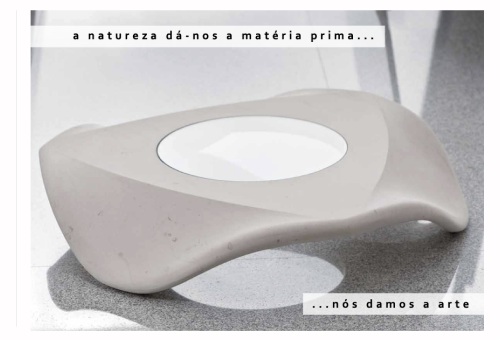
Today, modern quarries and industrial facilities have access to safer, more efficient and easier-to-operate equipment, as well as solutions that help improve the management of resources and raw materials, thereby reducing the environmental impact of the activity. This evolution has helped make natural stone production safer for workers, more efficient from an operational perspective and more sustainable from an environmental point of view.
Progressively, companies in the sector have been modernising their operations, adopting technologies and practices that reflect this transformation of the industry. Transgranitos is one example of this evolution, through the gradual introduction of new equipment, improvements in production processes and investment in energy-efficiency solutions.
Safety and modernisation of operations
One of the areas where technological evolution has had the greatest impact on the stone industry is operational safety, both in quarries and in processing facilities.
Modernisation of quarries
The introduction of new technologies in quarries has enabled the gradual replacement of traditional extraction methods with more controlled and safer processes.
One example is the use of diamond wire for cutting stone benches and blocks. This technology allows precise cuts to be made in the rock mass, significantly reducing the need for explosives, which were widely used for many years to separate the stone.
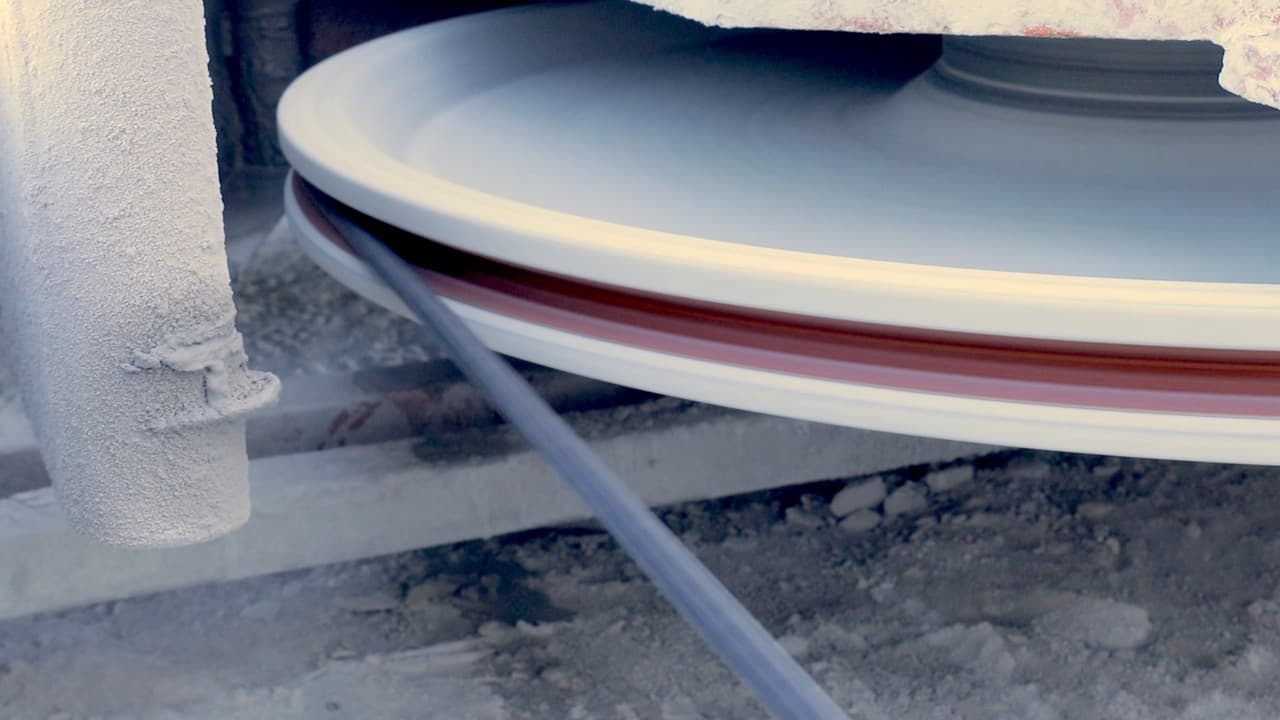
This reduction contributes to the minimisation of associated risks, both in terms of handling and the effects of blasting, from the point of view of worker safety as well as the impact on the surrounding environment.
Another important advance is related to the use of hydraulic drilling equipment, which has progressively replaced more traditional drilling techniques. This equipment provides greater stability during operations and reduces the physical effort associated with drilling tasks.
Water-assisted drilling also helps reduce dust formation during operations, contributing to lower worker exposure to inhalable silica particles and reducing the release of dust into the environment.
These technological improvements have made quarry operations progressively safer and more controlled.
Modernisation of processing facilities
Technological evolution has also had a significant impact on industrial stone processing facilities.
The introduction of new equipment and modern machinery, with automation systems and safety mechanisms, has reduced the need for manual intervention in certain operations and improved working conditions for operators.
Today, this equipment is easier to operate, provides greater control over production processes and helps make handling safer and more efficient.
Decarbonisation of processes
Another relevant aspect of the recent evolution of the stone industry is the reduction of dependence on external energy sources and the adoption of solutions that help reduce the carbon footprint associated with industrial activity.
One of the strategies adopted has been investment in renewable energy production for self-consumption, namely through the installation of photovoltaic plants.
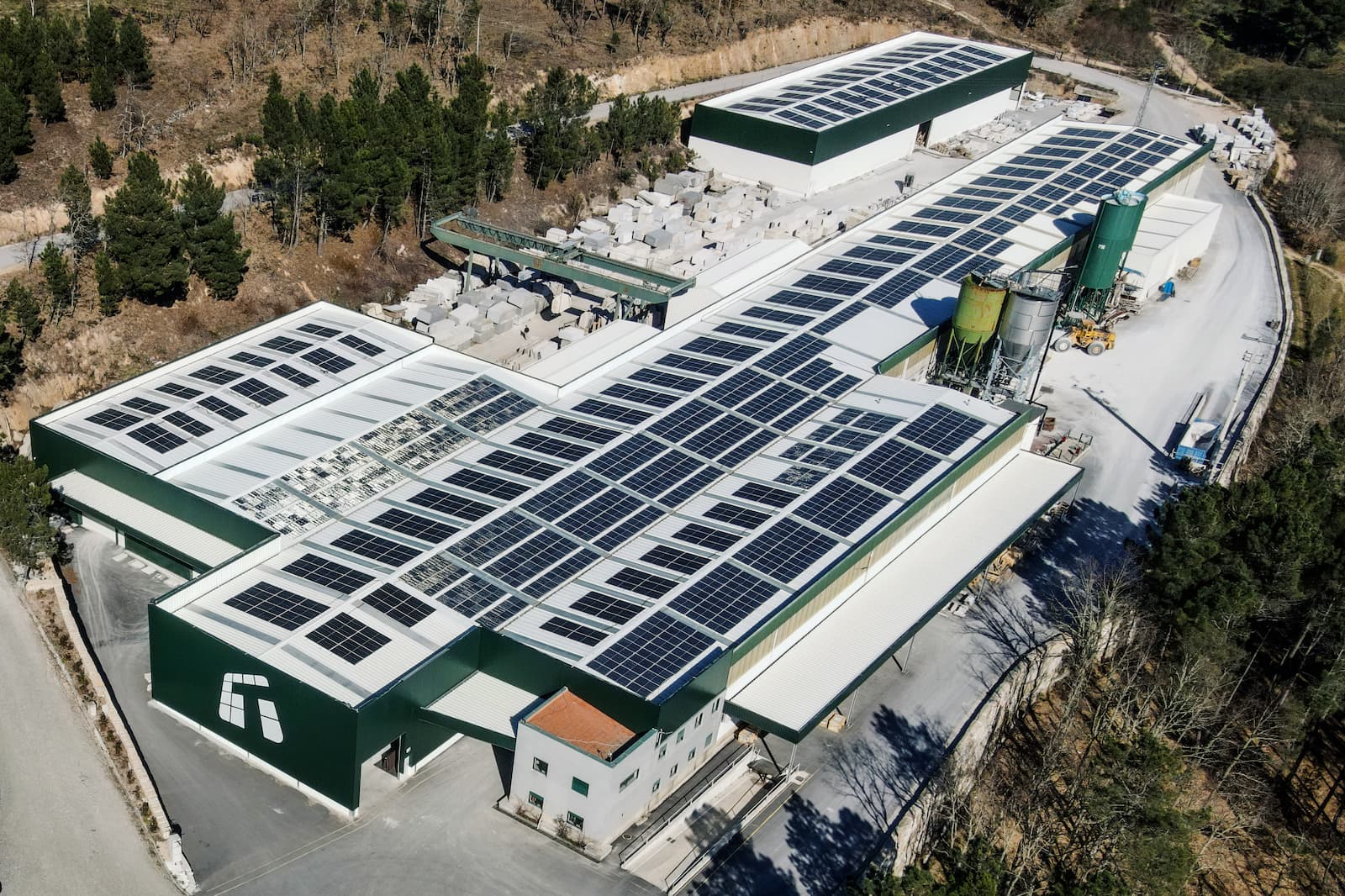
It is estimated that, at Transgranitos, this investment has avoided the emission of several tonnes of carbon dioxide into the atmosphere since the installation and subsequent expansion of its photovoltaic plant in 2017, which currently reaches 600 kWp of installed capacity.
Energy savings and efficiency
In addition to renewable energy production, improving energy efficiency has become one of the key objectives of modern industrial facilities.
Among the measures adopted are:
-
the progressive replacement of conventional lighting systems with LED lighting, reducing the energy consumption of the facilities
-
the adoption of electric indoor handling equipment, used for transporting and handling materials
-
processes of progressive quarry electrification, which help reduce emissions associated with the consumption of fossil fuels.
These measures improve the overall energy efficiency of operations and optimise resource consumption.
Water management and reuse in the production process
The natural stone industry relies heavily on the use of water in the cutting and processing of its raw material.
In modern industrial facilities, this resource is managed through wastewater treatment and reuse systems, which recover the water used in production operations.
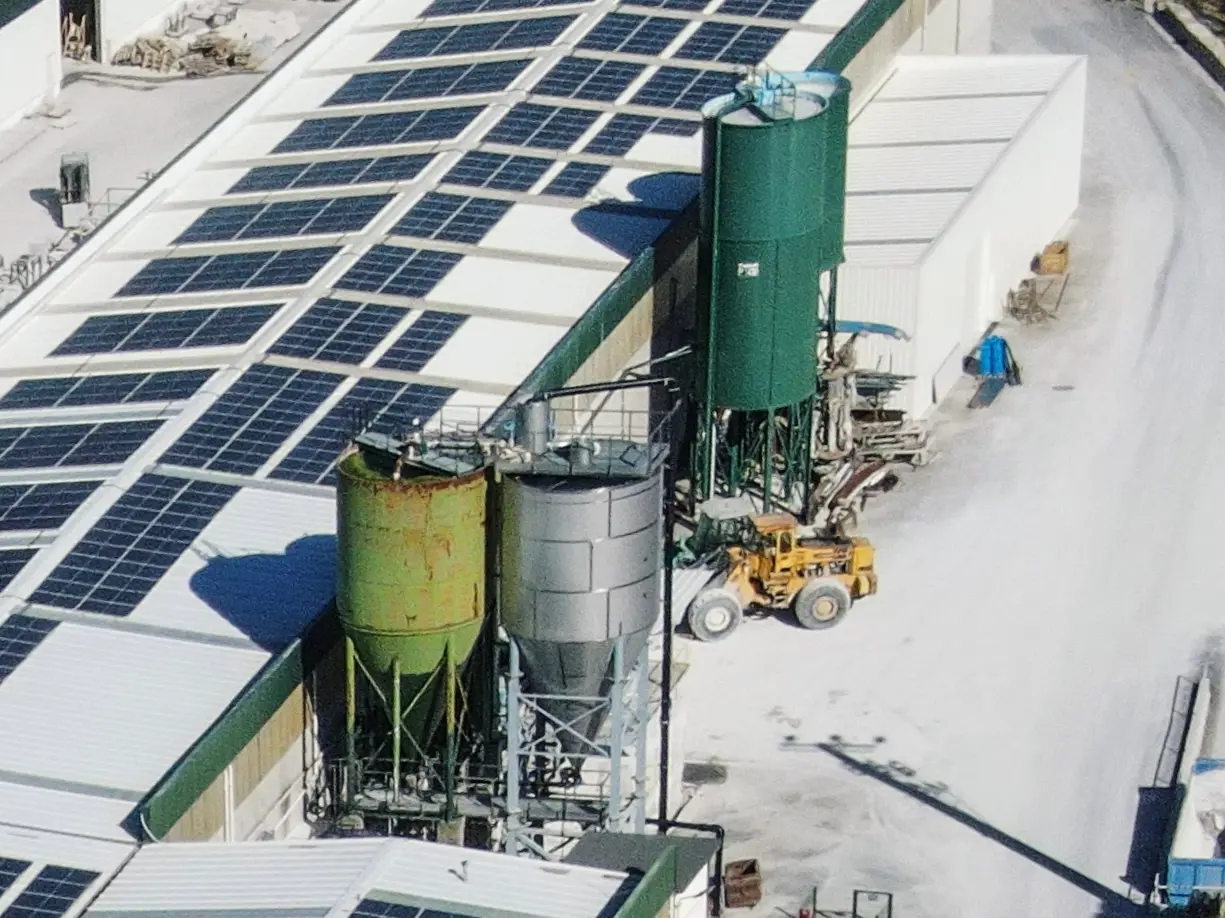
These systems separate the solid particles resulting from the cutting process — often referred to as stone-cutting sludge — allowing the water to be reused in the production process.
At Transgranitos’ facilities, a wastewater treatment plant has been implemented to treat and reuse the water used in industrial processes, significantly reducing water consumption and preventing the discharge of effluents into the environment.
Research and circular economy
In addition to improving existing production processes, the sector has also been exploring new ways of adding value to the by-products resulting from stone processing.
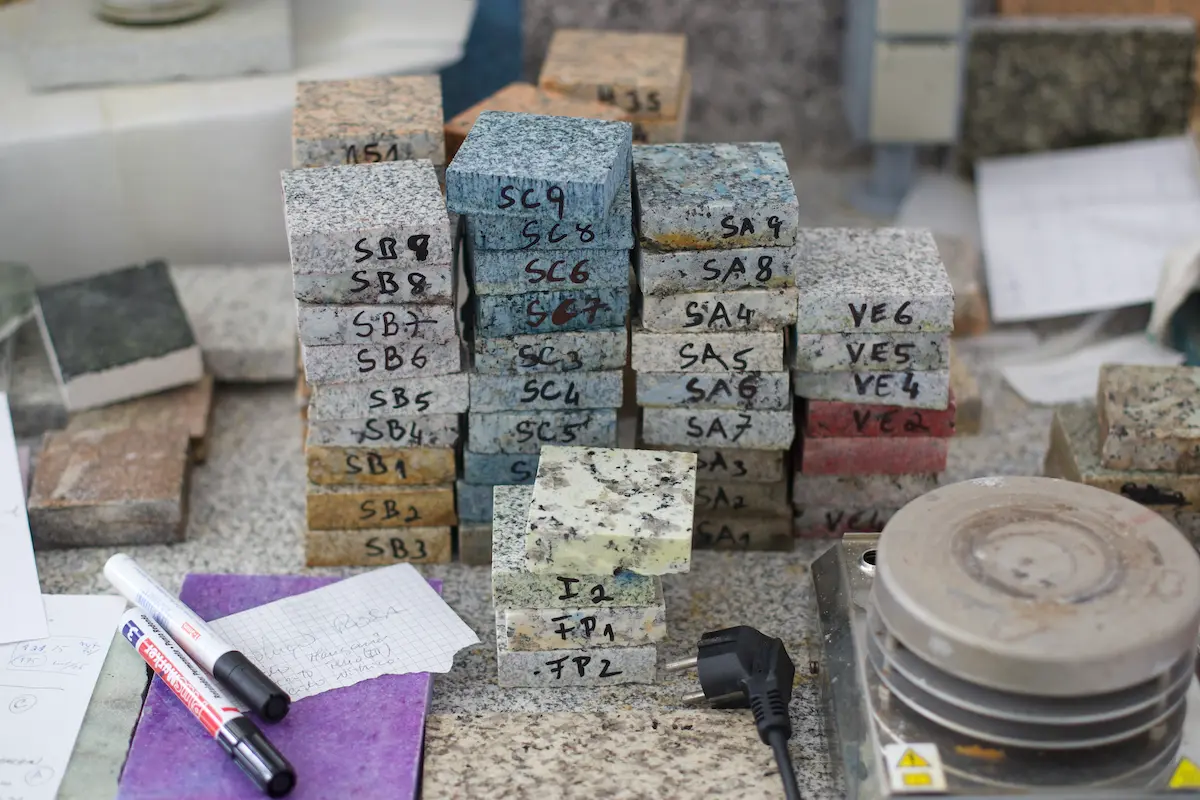
Through its past and ongoing research projects, Transgranitos has been carrying out research and development work in several areas, such as granite colouring and the reuse of sludge and residues from stone cutting for the production of new products.
These projects seek to develop solutions that can transform these materials into new products or applications, helping to promote circular economy models and reduce the volume of waste associated with industrial activity.
The initiatives developed in this area have encouraged the exploration of solutions that make it possible to add value to these by-products and contribute to a more efficient use of natural resources.
The technological evolution of the natural stone industry has been enabling a gradual and progressive transformation in the way stone is extracted and processed.
The introduction of new equipment, the adoption of safer and more efficient processes, and investment in energy-efficiency and resource-management solutions have helped make this activity more modern, safer and more responsible.
In this context, the industry also faces new challenges and responsibilities, such as:
-
making the activity more attractive and safer for workers
-
minimising the environmental impact of operations
-
increasing efficiency and improving resource management
-
investing in the continuity and continuous improvement of production processes.
These principles now represent important references for the sustainable development of the sector and also guide Transgranitos’ strategy, as the company seeks to keep pace with the evolution of the industry through the constant modernisation of its operations.
Learn more about our production process, our projects or our stones and their different finishes.
For quotations or further information, please contact our commercial team.