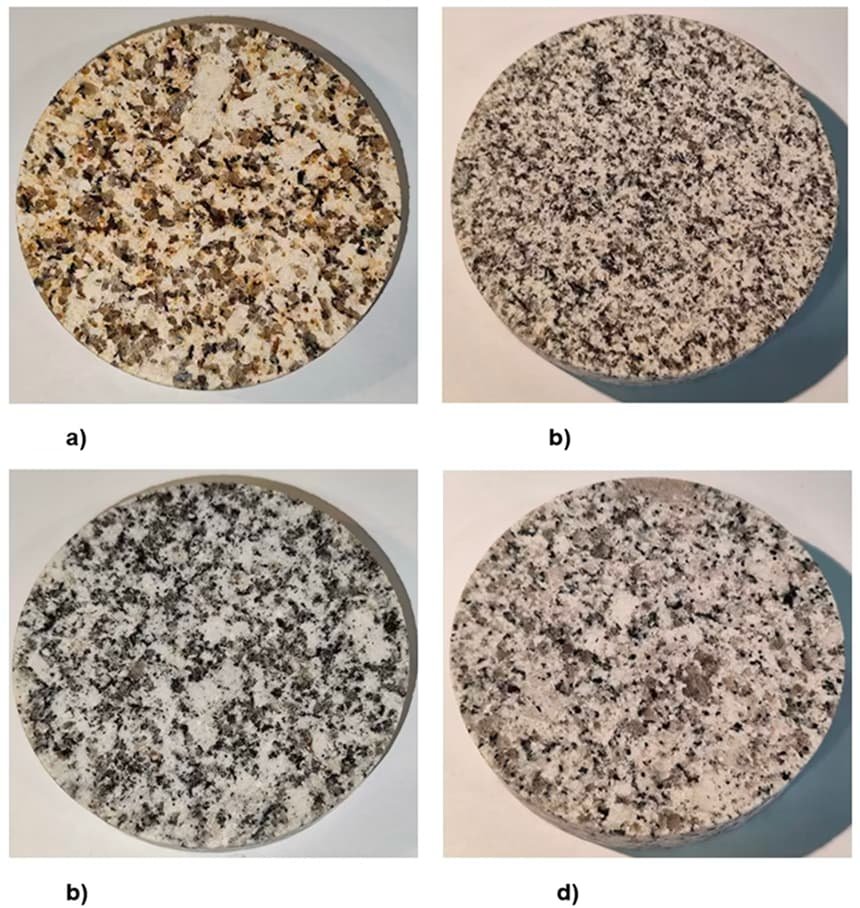
Figure 1. Granite varieties studied
a) Amarelo Real;
b) Branco Micaela;
c) Cinza Penalva;
d) Pedras Salgadas.
The growing demand for more energy-efficient construction solutions has driven research into materials capable of optimizing the use of solar energy. Natural stone, thanks to its durability and thermal properties, can play an important role in heat storage and transfer systems, particularly in water heating and radiant floor heating applications.
Four granite varieties marketed by Transgranitos were analyzed: Amarelo Real, Branco Micaela, Cinza Penalva, and Pedras Salgadas (Figure 1). Two stone specimens were used for each variety, for a total of eight samples.
Figure 1. Granite varieties studied
a) Amarelo Real;
b) Branco Micaela;
c) Cinza Penalva;
d) Pedras Salgadas.
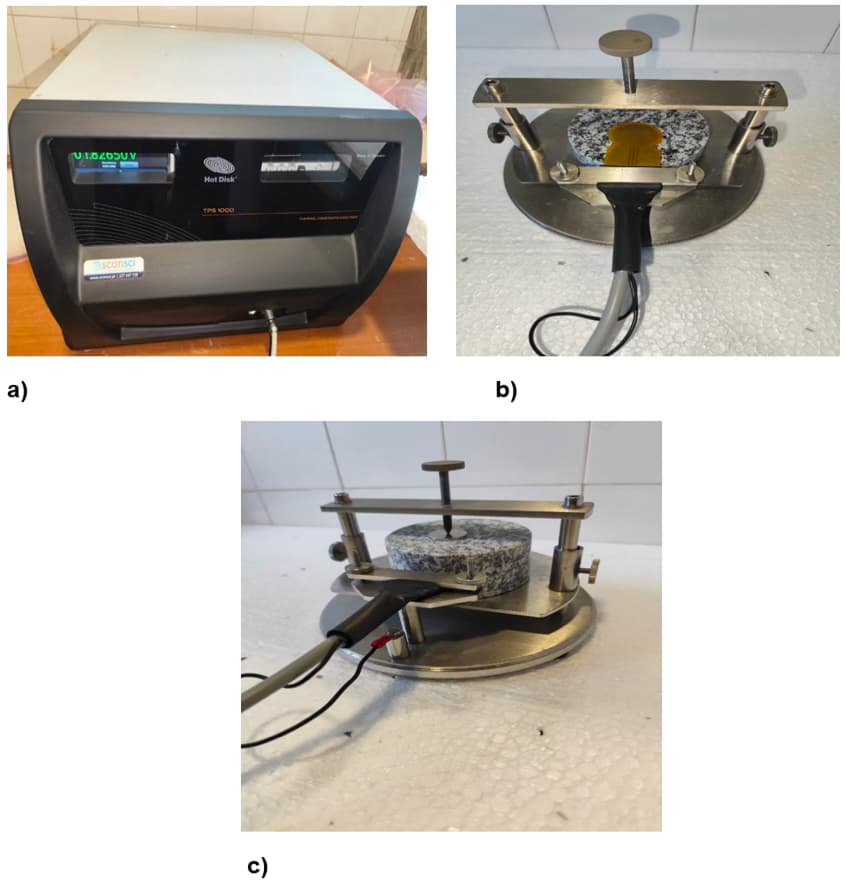
The evaluation was carried out using specialized Hot Disk equipment (Figure 2), capable of measuring how efficiently each type of stone conducts heat and how much thermal energy it can store. The sensor was placed between two samples of the same granite variety, ensuring uniform heat distribution during testing.
Figure 2.
a) Equipment used to determine thermal properties;
b) Sensor positioned on the sample;
c) Sensor placed between two samples.
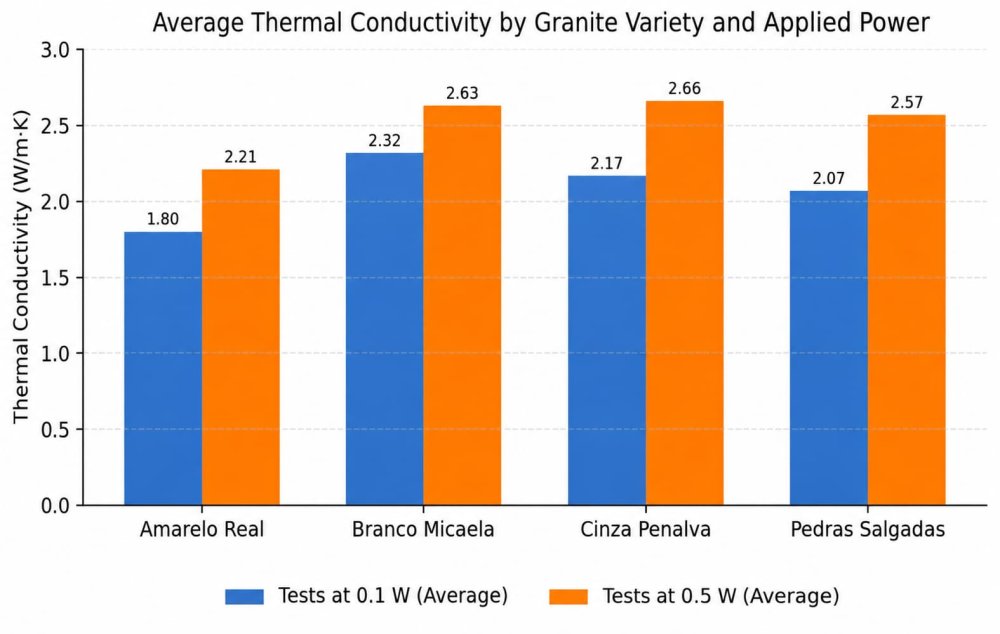
The results revealed clear differences among the granite varieties studied (Figure 3). Cinza Penalva granite showed the best performance in heat absorption and retention, thanks to its denser and more compact internal structure. In contrast, Amarelo Real granite exhibited the lowest thermal performance due to signs of natural weathering that had created small fractures, hindering heat transfer.
Figure 3. Results obtained.
The project is now moving forward with the development and testing of prototypes for real-world heating applications, including water heating and radiant floor heating systems, to evaluate their performance under actual operating conditions.
Subscribe our newsletter