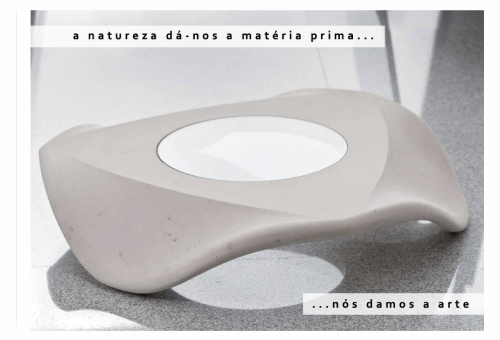
It is an essential capability for projects that require special pieces, curved elements, moldings, ornamental features, architectural components or solutions of greater technical complexity.
At Transgranitos, this work combines rigorous project interpretation, specialized equipment and knowledge of how stone behaves. The goal is to transform a design into an executable, precise piece suited to its final application, while respecting dimensions, joints, finishes and the technical requirements of each project.
From design to execution
Based on projects provided by clients, architects or engineering teams, or developed internally by our technical department, each piece is analyzed according to its shape, dimensions, application and selected stone variety.
This process makes it possible to translate the design into an executable solution, respecting proportions, joints, tolerances, textures and finishes.
In special pieces, every detail matters. A radius, a curve, a molding, a joint or a concave surface can change the final reading of the whole and directly influence its appearance, application or performance.
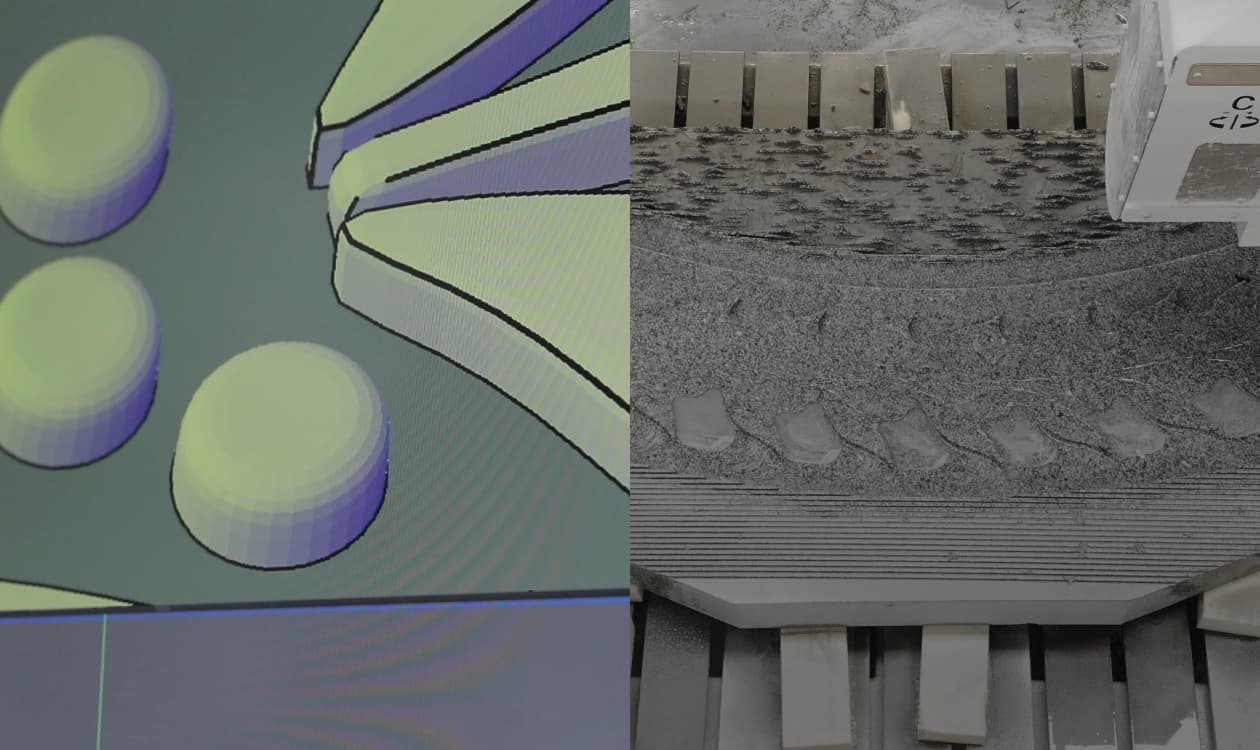
Specialized equipment
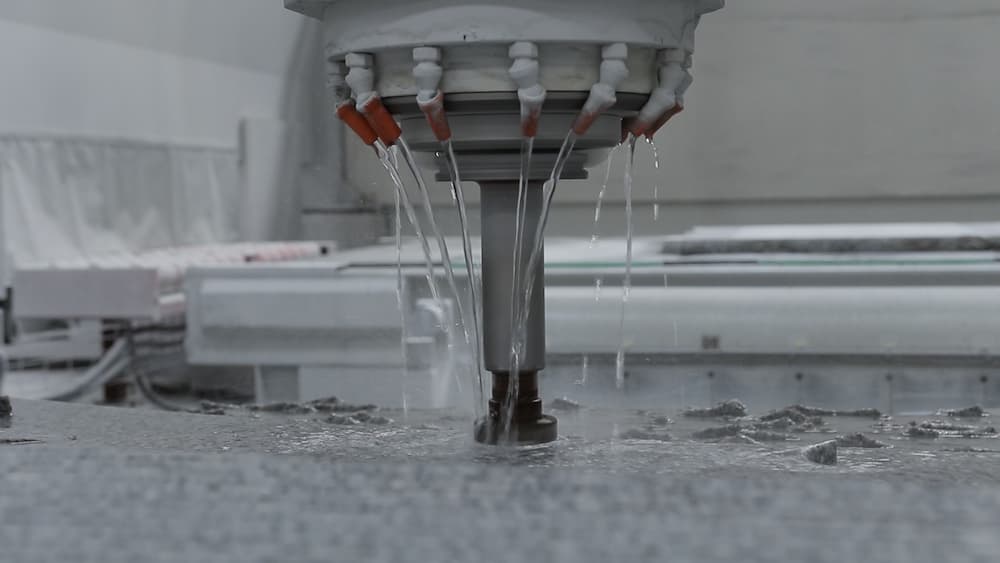
For the production of curved or complex-geometry pieces, we use CNC equipment, diamond wire cutting machines and multi-axis CNC systems.
These technologies make it possible to execute forms that would be difficult to achieve using only conventional processes, ensuring repeatability, dimensional accuracy and greater control over the final result.
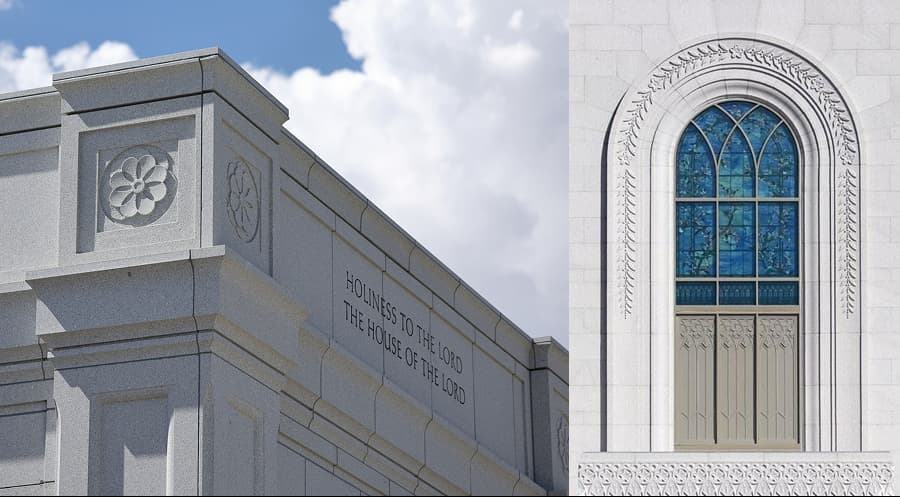
Common applications include:
- concave and convex facades;
- cornices and ornamental elements;
- moldings and architectural details;
- arches and vaults;
- monument components;
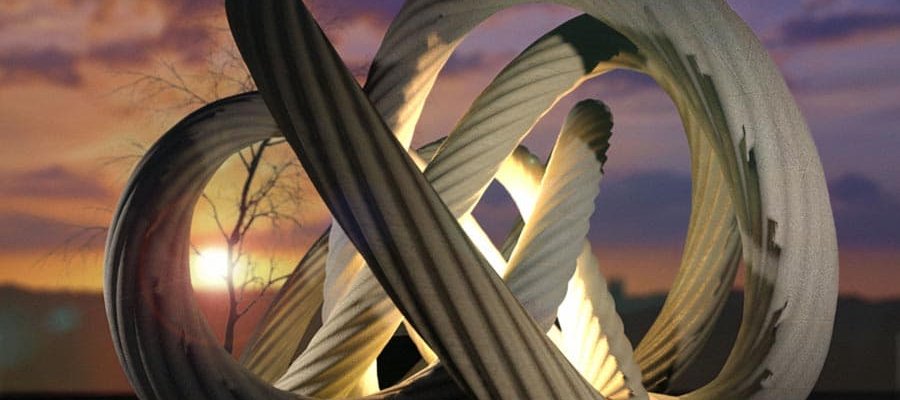
- sculptural elements;
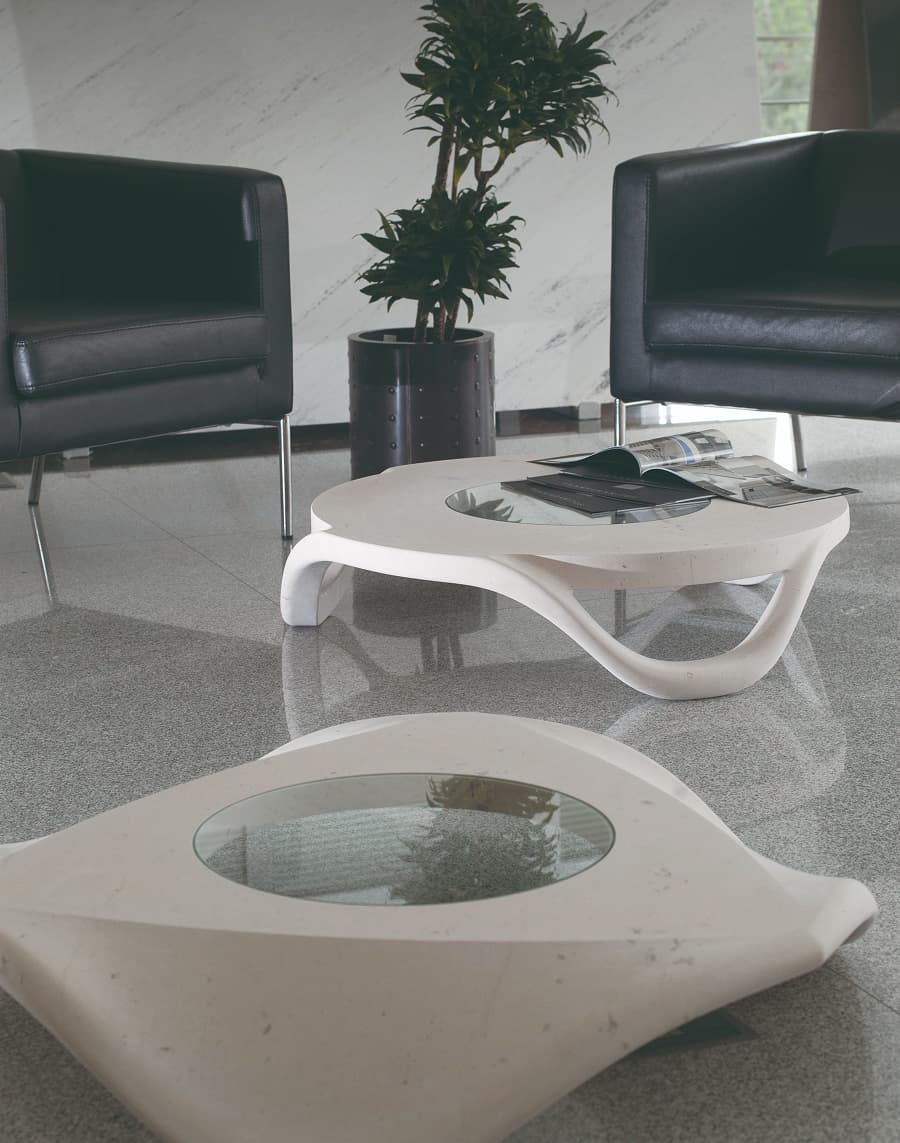
- decorative or functional volumes;
- special components for technically demanding projects.
Technology allows stone to be worked with great precision, but the final result also depends on how each project is prepared, programmed, monitored and finished.
Beyond technology
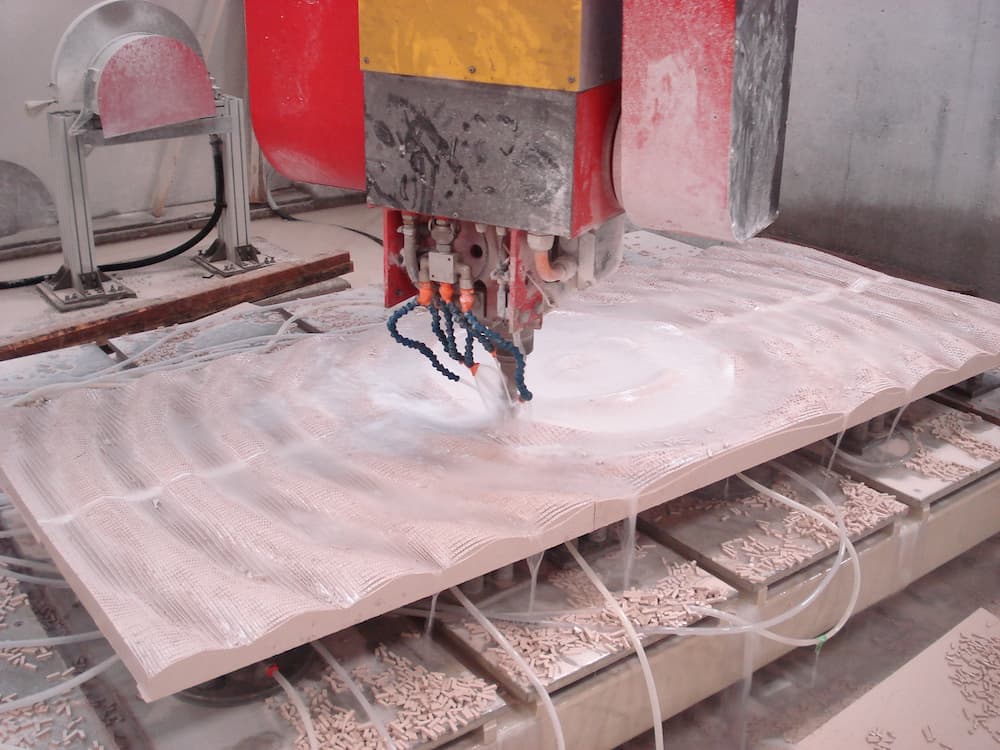
On the one hand, the production of 3D stone pieces requires robust machinery, technical programming and controlled processes. On the other, it also requires material sensitivity, attention to detail and the ability to interpret form beyond the technical drawing.
Stone is not a neutral material. Each block has its own structure, veining, texture, strength and behavior. For this reason, three-dimensional production requires a careful reading of the material, from the initial selection to the final finish.
Even when the form is produced using CNC equipment, there are often finishing, inspection and refinement stages that depend on human experience. It is through this combination of technology and know-how that pieces achieve precision, consistency and aesthetic value.
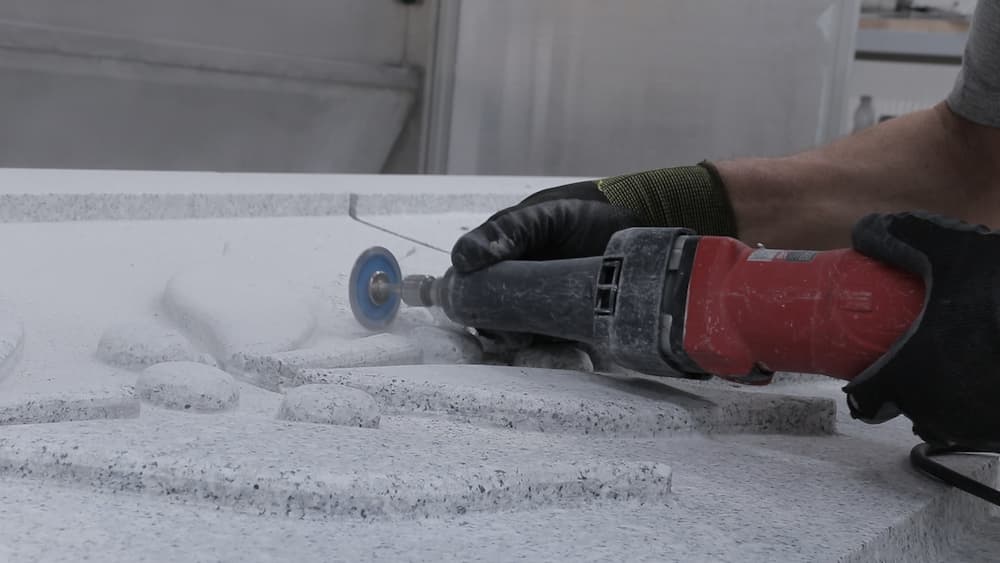
Solutions beyond function
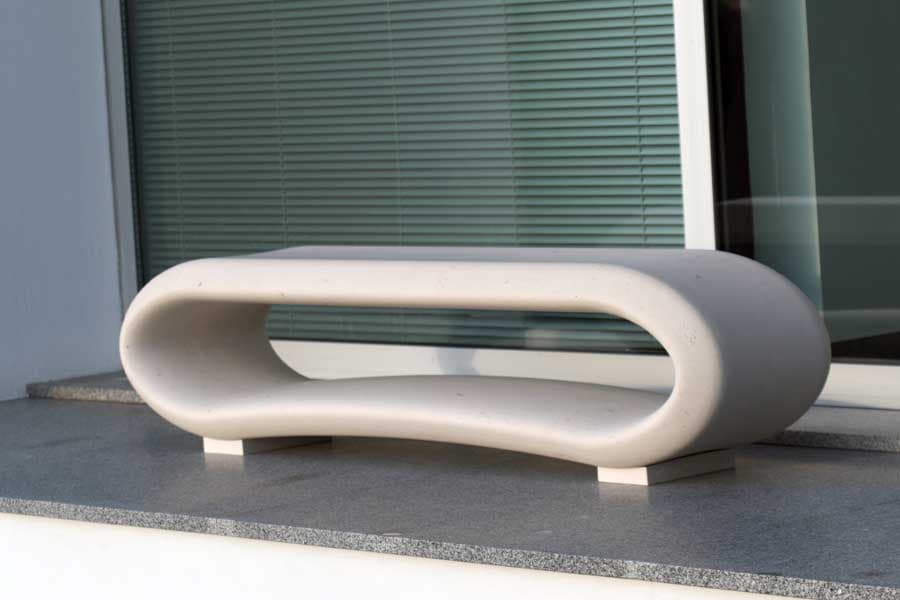
The ability to produce 3D pieces in natural stone makes it possible to respond to projects where form is an essential part of the architectural identity.
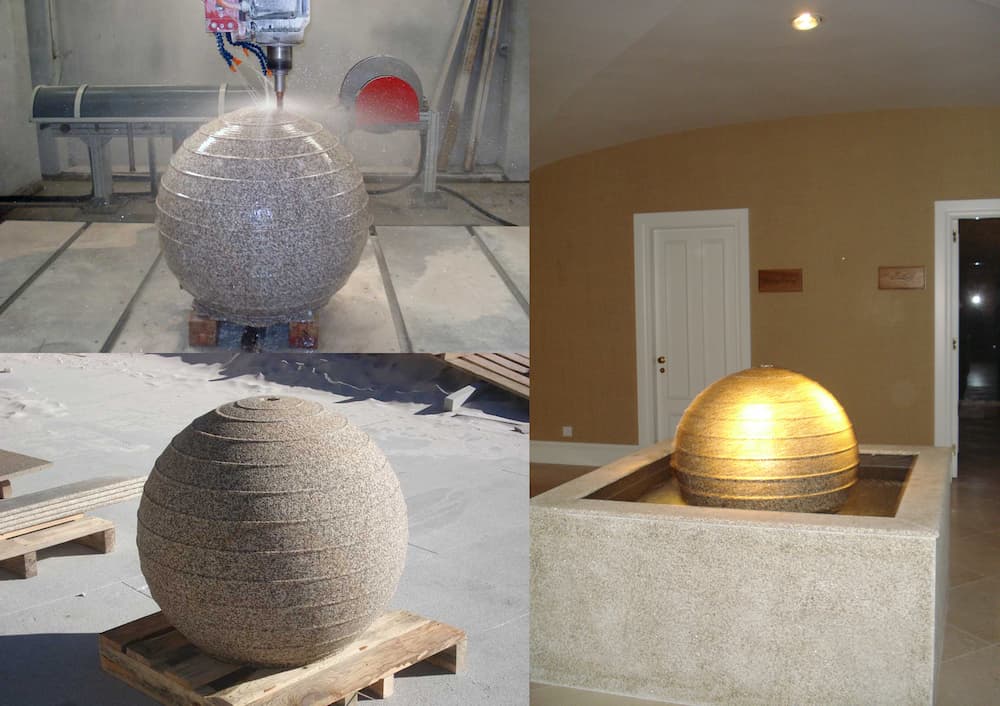
From classic elements such as cornices, moldings and arches to contemporary pieces with free-form geometry, each solution is developed with the goal of respecting the original design and ensuring technical feasibility.
This approach allows Transgranitos to collaborate on projects where natural stone takes on not only a functional role, but also a visual, symbolic or artistic presence.
The production of three-dimensional pieces demonstrates the versatility of natural stone as a material for architecture and design.
With the right technical resources and an experienced team, it is possible to transform the solidity of the material into highly precise pieces, designed for projects where form, technique and aesthetics come together.
Learn more about our production process, our projects or our stones and their different finishes.
For quotations or further information, please contact our commercial team.