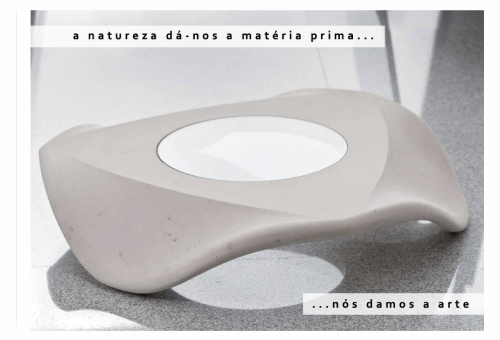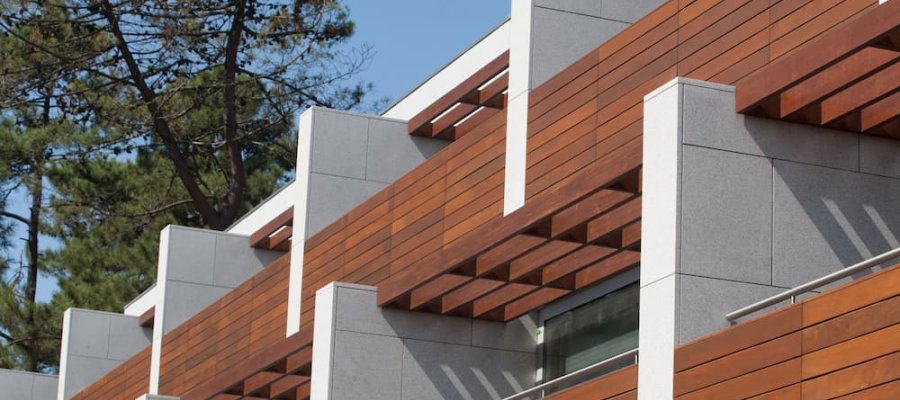
At the same time, advances in design tools, automation processes and processing equipment have significantly expanded the possibilities for using stone. Today, it is possible to develop more precise, complex solutions tailored to the specific requirements of each project, combining the natural qualities of the material with modern production methods.
Durability and long-term performance
In a context where extending the service life of buildings and reducing the need for frequent replacement are increasingly important, durability plays a central role in material selection.
Natural stone offers high resistance to wear, weather conditions and intensive use when correctly selected and applied. These characteristics make it particularly suitable for facades, flooring, stairs, circulation areas, public spaces and other high-use areas.
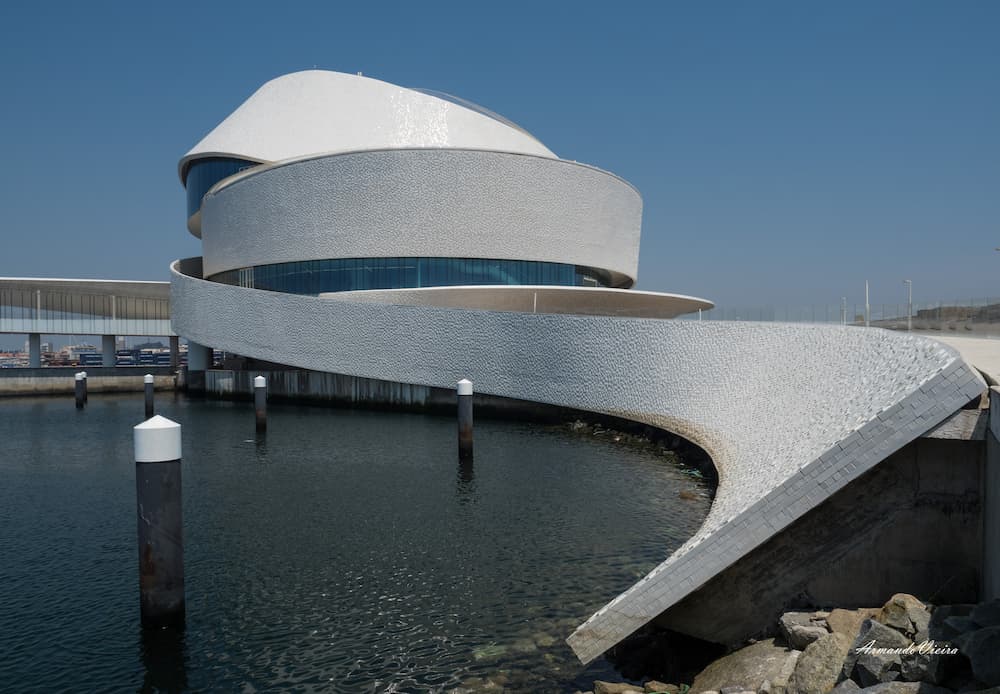 Port of Leixões Cruise Terminal, Portugal
Its durability does not, however, mean that every type of stone is suitable for every application. Each variety has specific properties, so selection should take into account factors such as exposure, water absorption, mechanical resistance, thickness, finish and fixing system.
Rather than simply being regarded as an inherently resistant material, stone should be understood as a material that requires technical knowledge. When properly specified, it can maintain its performance and visual quality for decades, ageing in an elegant and natural way.
Character and integration with the surroundings
Contemporary architecture has increasingly valued materials capable of conveying authenticity and creating a more direct relationship between buildings, their users and the surrounding environment.
In this context, natural stone offers a set of characteristics that are difficult to reproduce with artificial surfaces. Its colour, texture, structure and variation are the result of unique geological processes, meaning that no two pieces are exactly alike.
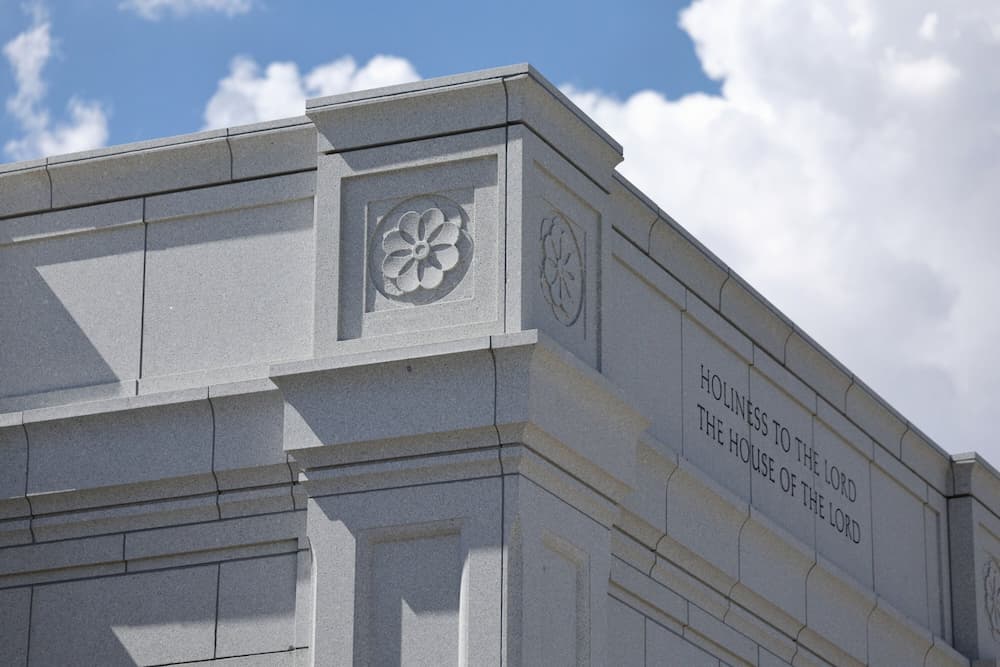
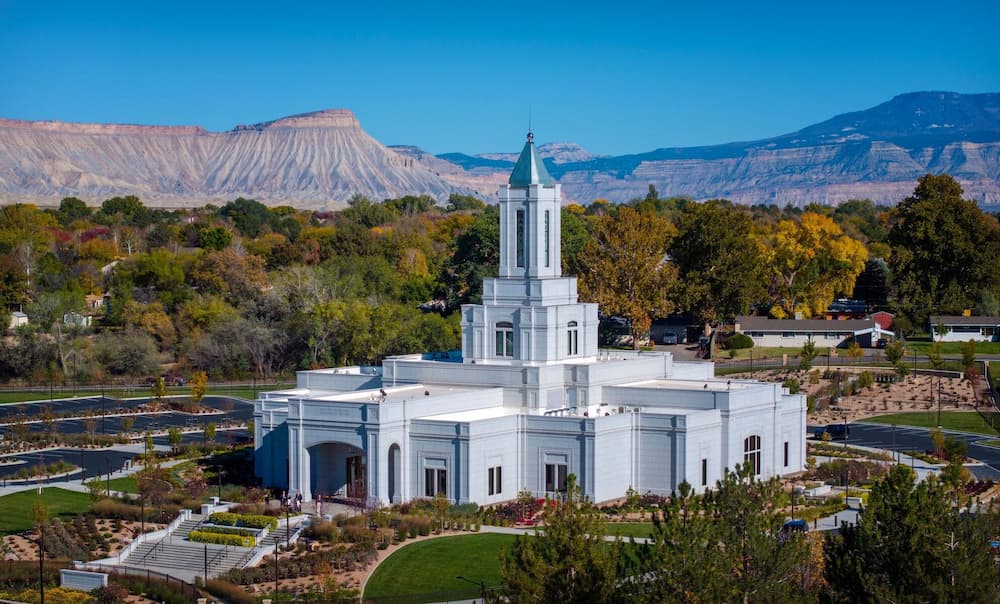 Grand Junction Temple, Colorado, USA
This variation is part of the material’s character. When anticipated and managed from the design stage, it can be used to create surfaces with visual richness and expression.
The origin of the stone can also strengthen the relationship between a building and its context. The use of local materials, or materials associated with a particular region, can help establish continuity between architecture and landscape, integrating the project into a broader geographical context.
Technology, precision and new possibilities
Technological development has not changed the nature of stone, but it has profoundly transformed the possibilities for designing and working with it.
Three-dimensional design tools make it possible to represent components and systems in greater detail, anticipate connections, assess thicknesses and prepare complex geometries before production begins. Digital modelling also facilitates coordination between architects, engineers, manufacturers and installation teams, reducing ambiguity in the interpretation of the project.
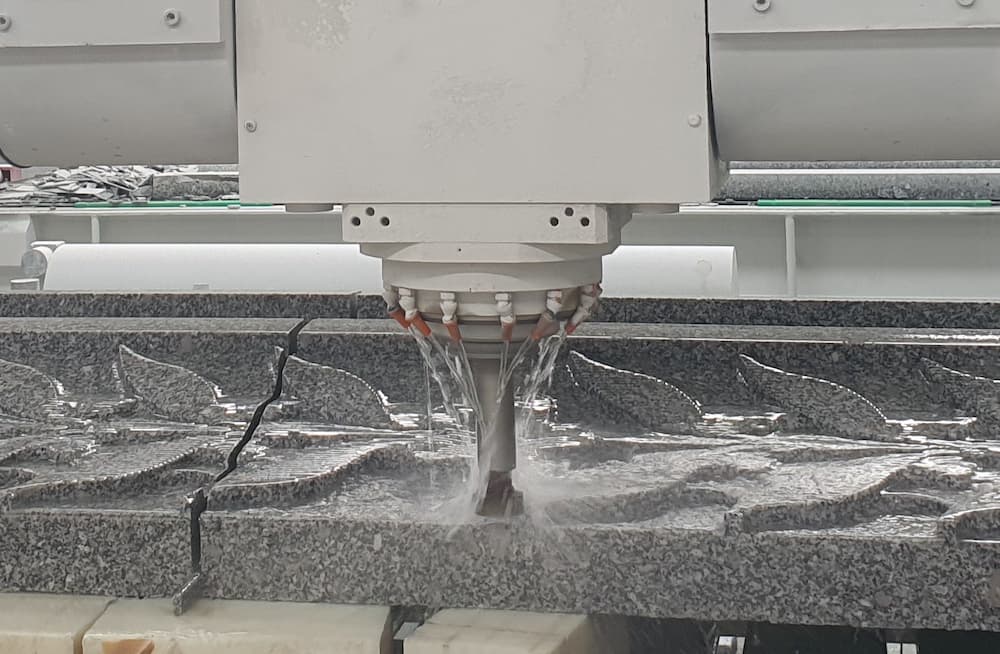
In production, CNC equipment, automated cutting systems, diamond wire, milling and other processing technologies make it possible to work to tighter tolerances and achieve greater consistency between pieces.
This capability is particularly relevant in the production of three-dimensional elements, mouldings, columns, stairs, curved surfaces, sculptural pieces and components with specific connections. Geometries that once required slow processes or were difficult to reproduce can now be produced with greater control and repeatability.
Technology also makes it possible to improve cutting plans and the use of blocks and slabs, helping to reduce waste and organise production more efficiently.
However, the technical ability to produce a particular form does not necessarily mean that it is the most appropriate solution. Weight, thickness, fragility, transport, installation and cost must still be considered. Technology expands the possibilities, but it does not replace knowledge of the material or sound decision-making.
The best results come from combining advanced tools, technical experience and a clear understanding of the actual conditions and requirements of use.
Versatility of applications
Natural stone can be adapted to a wide range of applications. It can have a solid and monumental presence, but also a light and understated one, depending on the design intent and the way it is used.
The size of the pieces, joint design, type of finish, thickness and method of installation all directly influence the final appearance. A polished surface produces a very different result from a honed, bush-hammered, sawn or textured finish.
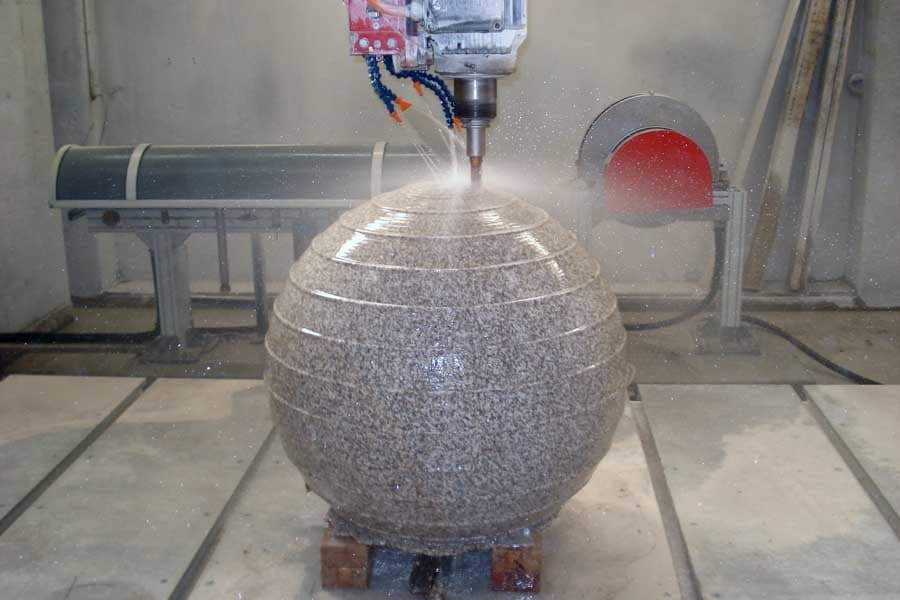 Fountain sphere in the inner courtyard of The Yeatman Hotel, Vila Nova de Gaia
The same stone variety can therefore be used in different ways within the same project. A rougher finish may meet the requirements of an outdoor floor, while a smoother surface can be used in interiors or on elements intended for close contact.
This diversity makes it possible to create continuity between facades, entrance areas, communal spaces and interiors, maintaining a coherent material language without repeating exactly the same solution.
Beyond conventional applications, stone is increasingly being used in furniture, counters, washbasins, interior cladding, decorative elements and pieces developed specifically for individual spaces. This ability to move between architecture, construction and design reinforces its relevance in contemporary projects.
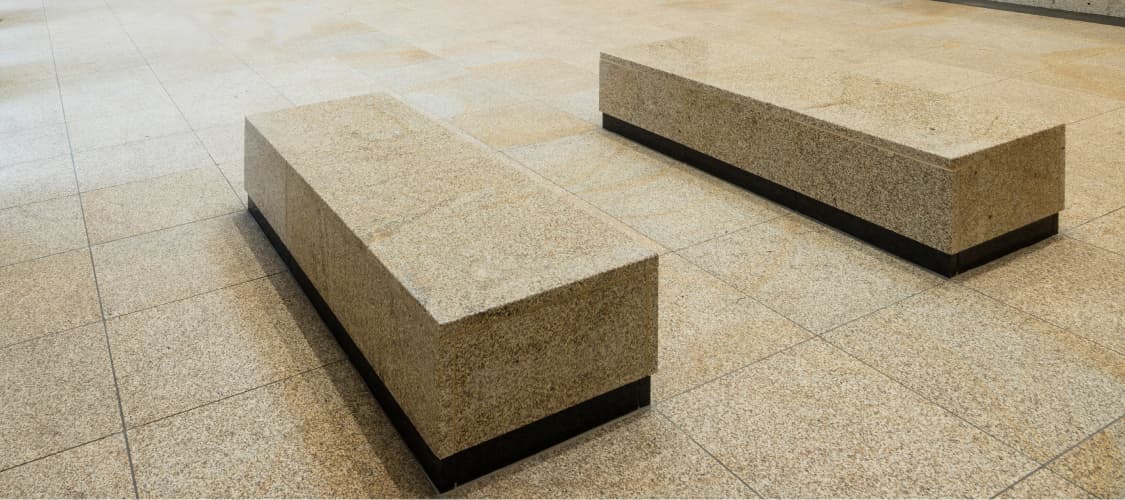
Stone does not necessarily impose a particular aesthetic. Its expression results from the decisions made throughout the project and from the way it is combined with other materials such as wood, glass, metal or concrete.
Sustainability and responsible planning
As a natural material, stone is often automatically associated with sustainability. However, a responsible assessment requires a broader analysis.
The origin of the material, transport distance, extraction methods, energy consumption during processing, waste management and suitability for the intended application are all relevant factors. Natural stone is not sustainable simply because it occurs in nature.
Durability is nevertheless one of its main advantages. A material capable of remaining in service for long periods reduces the need for replacement and the repeated use of new resources.
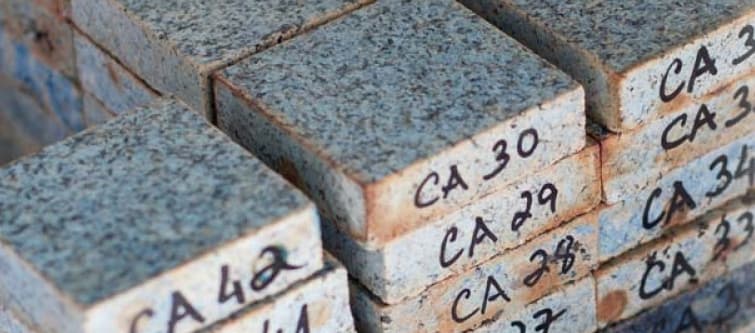
The possibility of reusing pieces, recovering existing elements or finding new uses for materials from other projects can also help extend their life cycle.
Advances in production processes have made it possible to improve the use of raw material, optimise cutting and find applications for formats or elements that might previously have been discarded. These improvements do not eliminate the impact of the activity, but they allow production to be carried out in a more efficient and controlled way.
Sustainability therefore depends on conscious specification. Choosing a stone that is appropriate for the project, avoiding unnecessary oversizing, considering its origin and planning the processing correctly are decisions that are just as important as the choice of material itself.
A historic material prepared for the future
Natural stone continues to play an important role in contemporary architecture because it can respond simultaneously to technical, functional and expressive requirements.
Its durability makes it possible to create buildings designed to last. Its natural variation gives spaces character and depth. The diversity of finishes and applications provides architectural freedom. New technologies, in turn, have increased precision, control and the range of possible solutions.
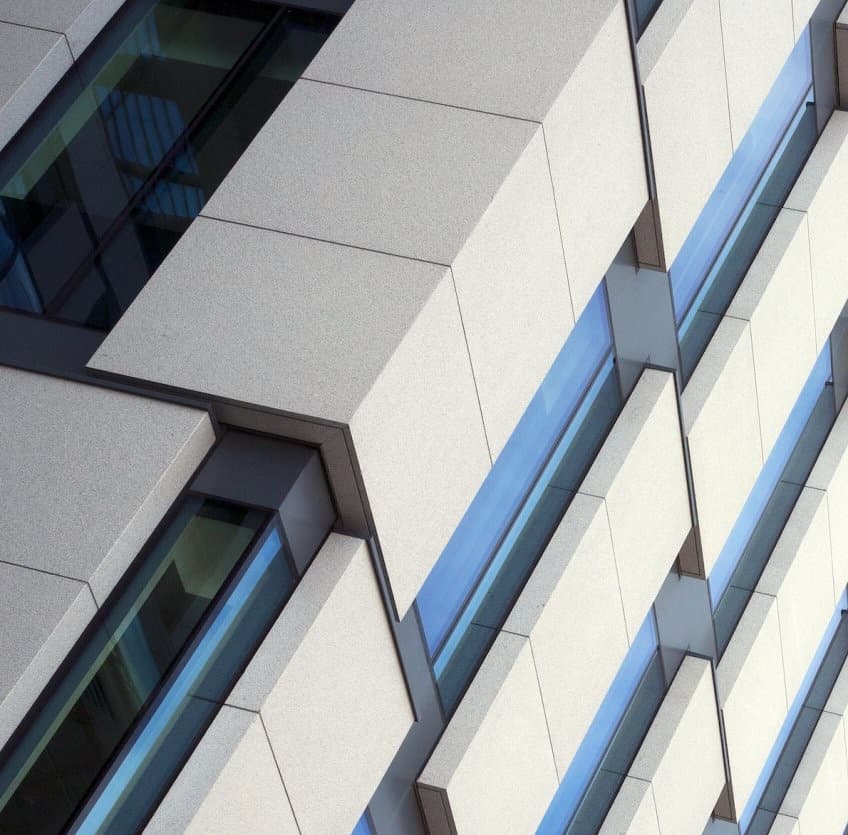 Bio-science Trinity College, Dublin, Ireland
The current relevance of stone is not simply the result of tradition or a passing aesthetic preference. It comes from the combination of the material’s properties, technical knowledge and the ability to adapt it to the requirements of each project.
When properly selected, processed and installed, natural stone provides reliable solutions for applications that require quality, permanence and character.
Learn more about our production process, our projects or our stones and their different finishes.
For quotations or further information, contact our commercial team.